Set a realistic batch-cooking budget
Batch cooking on budget starts with a number that feels possible, not a heroic promise made beside an overflowing trolley. The aim is to decide what the household can spend, then build meals around that limit. A useful budget includes the food already in the cupboard, the cost of fresh ingredients, and a little room for the week to behave unpredictably. Nobody plans for a forgotten lunch or a mysteriously empty jar of coffee, yet both have a habit of appearing.
Calculate your weekly food budget
A household can begin by checking recent grocery spending and separating food from household supplies, takeaway meals, and other extras. The resulting figure is a starting point rather than a moral judgement. It can then be divided across the number of people and meals the batch-cooking plan is expected to cover. A simple note on a phone is enough; the system does not need a spreadsheet with its own weather forecast.
The most useful figure is the amount available for the next shop, after allowing for staples already on hand. If a freezer contains several portions of soup, that is part of the plan, not an excuse to buy more soup. Keeping the number visible makes it easier to spot when an ambitious menu has quietly become an expensive hobby.
Choose meals that share affordable ingredients
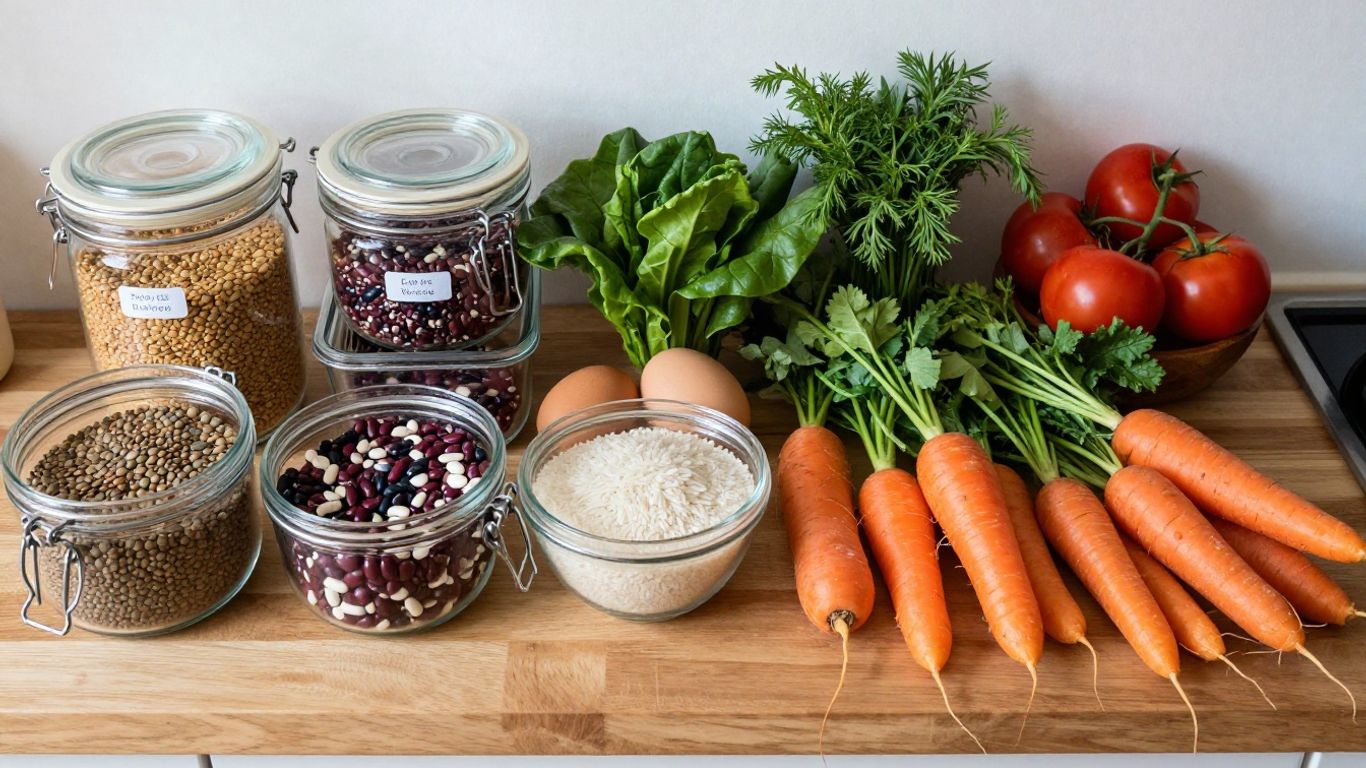
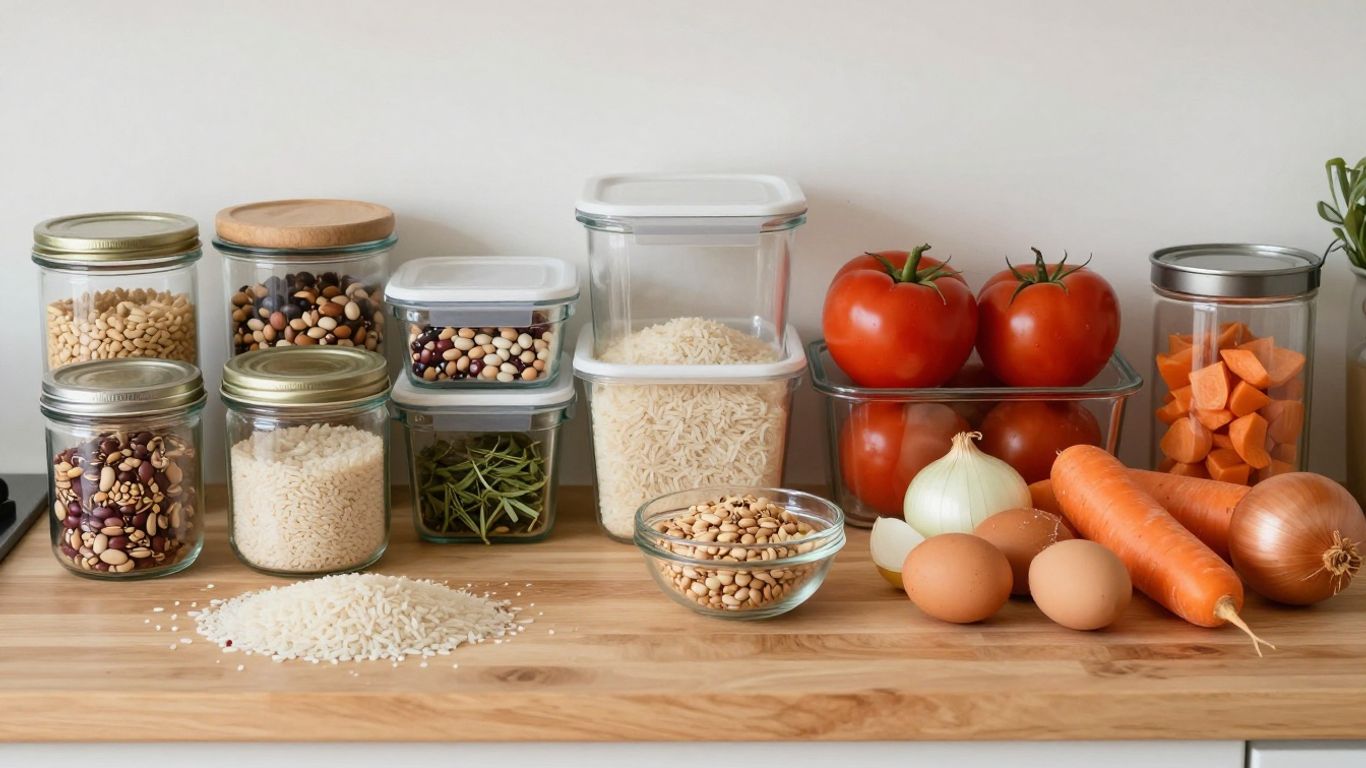
Meals become cheaper when their ingredients can appear in more than one dish. A bag of carrots might support a lentil stew, a tray of roasted vegetables, and a lunch salad, while onions, garlic, tomatoes, rice, and herbs can quietly connect the whole menu. Shared ingredients reduce waste because fewer half-used purchases are left waiting in the refrigerator.
The strongest combinations are varied enough to prevent boredom but similar enough to keep shopping sensible. A grain bowl, a soup, and a tray bake can share vegetables without tasting like the same meal wearing different hats. Before choosing recipes, the cook can circle ingredients that appear repeatedly and remove any that serve only one expensive purpose.
Price recipes by serving, not by sticker shock
A large bag of rice or a family-sized tin of tomatoes may look costly beside a single-serving convenience meal. Its more useful measure is the number of portions it creates. The cook can add the estimated ingredient costs for a recipe, then divide by the portions likely to be eaten rather than the portions promised by an optimistic recipe writer.
This method also exposes false bargains. A cheap dish that nobody enjoys is not inexpensive if it ends up in the bin or sends everyone searching for takeaway. A slightly dearer meal may earn its place when it provides dependable lunches, freezes well, and uses ingredients that already have a job elsewhere.
Leave room for snacks, staples, and surprises
A menu covering every breakfast, lunch, and dinner can appear impressively organised while leaving no money for milk, fruit, bread, snacks, or replacement pantry staples. A modest buffer keeps the plan practical. It also allows a household to buy a useful reduced-price item without dismantling the entire week.
The buffer should not be treated as spare money that must be spent. If it survives the shop, it can remain available for the following week or cover a staple that is running low. That small habit makes batch cooking calmer, because every unexpected onion is no longer a budget emergency.
Plan a menu that earns its keep
A good menu does more than list attractive recipes. It creates a small network of ingredients and cooking tasks that support one another throughout the week. The cook should consider how meals will feel on different days, including the day when enthusiasm has gone missing. Variety matters, but so does the ability to assemble dinner without starting a second shift.

Pick versatile recipes with overlapping ingredients
The menu can start with two or three dependable recipes rather than a dozen new experiments. A tomato-based sauce might accompany pasta, beans, or roasted vegetables, while cooked grains can move between bowls, salads, and stuffed vegetables. This approach keeps the shopping list short without making every meal identical.
Overlapping ingredients are most useful when they change character through seasoning and texture. Lemon, herbs, yoghurt, or a sharp dressing can make yesterday’s roasted vegetables feel quite different from today’s grain bowl. The cook gets variety from finishing touches rather than from purchasing a new condiment for every recipe.
Balance fresh, frozen, canned, and pantry foods
Fresh ingredients bring colour and crunch, but frozen vegetables can be reliable, economical, and ready without much trimming. Canned beans, tomatoes, and fish can provide useful foundations, while dried grains, spices, and pasta wait patiently in the pantry. A balanced menu uses each category for what it does well.
Fresh food is best assigned to meals early in the week, while sturdier and frozen ingredients can carry the later days. This order reduces pressure to use everything immediately. It also prevents the common sight of one heroic bag of spinach collapsing in the crisper drawer before its big moment arrives.
Build a mix of breakfasts, lunches, dinners, and sides
Batch cooking works best when it solves several small problems rather than producing one enormous pot of dinner. A cook might prepare overnight oats or egg muffins for mornings, a grain-and-bean mixture for lunches, a tray bake for dinners, and roasted vegetables as a flexible side. The menu then supports the whole week instead of merely making Tuesday impressive.
Portions should suit the people eating them and the containers available. Some meals can be complete portions, while others are components that combine at the last minute. This leaves room for appetite, schedules, and the occasional evening when toast is the most honest answer.
Avoid cooking enough chili to feed your entire postcode
A batch is only useful when it can be eaten or frozen in good time. New cooks often multiply a recipe because the arithmetic looks efficient, then discover that every container in the kitchen contains the same meal. A smaller batch, repeated when it works, is usually safer than a heroic quantity nobody wants by Thursday.
The cook can test a recipe at its ordinary size and record how many portions the household actually gets. That real-world yield is more valuable than a serving count printed in tiny type. It also helps with freezer space, reheating time, and the emotional health of anyone asked to eat chilli for the fourth day running.
Shop strategically for maximum savings
Shopping becomes less expensive when it follows the menu rather than inspiring one. The cook should check the refrigerator, freezer, and pantry before leaving home, then write down only what completes the plan. A short, specific list leaves less room for hopeful purchases that look useful under bright supermarket lighting.
Unit prices, pack sizes, and storage life deserve attention too. The lowest shelf price is not always the lowest cost per usable portion, particularly when half the pack will be discarded. A strategic shop is not joyless; it simply gives enthusiasm a boundary.
Create a batch-cooking shopping list
A practical list groups ingredients by where they are found or how they will be used. That makes it easier to notice duplicates and to compare a planned quantity with what is already at home. The cook can also mark ingredients that are essential, flexible, or optional, which helps when a price has taken an unexpected holiday.
A useful list may include:
- Ingredients needed for the main recipes
- Fresh items with a short usable life
- Pantry staples running low
- Freezer items that complete later meals
After writing the list, the cook should check whether each item appears in a recipe or serves a clear purpose. This final pause is often where a decorative jar of sauce loses its invitation, while an overlooked bag of oats is welcomed back into the plan.
Compare unit prices and store brands
The price printed on the front of a packet tells only part of the story. Unit pricing can reveal whether a larger pack is worthwhile and whether a store-brand version offers the same practical use for less. The comparison should include the amount that will actually be eaten, not just the size of the packaging.
Ingredients such as flour, canned tomatoes, rice, beans, and frozen vegetables often have straightforward substitutes. For products where taste matters more, the cook can buy a small pack first and assess whether the saving is worth keeping. There is no prize for owning a cupboard full of economical ingredients nobody enjoys.
Buy in bulk without creating food waste
Bulk buying makes sense when the household already has a storage plan and a reliable way to use the ingredient. Dry goods, frozen vegetables, and some canned foods may cope well with a larger purchase. Fresh produce is less forgiving unless it will be cooked, shared, or preserved promptly.
Before buying extra, the cook can ask three plain questions: Is there space for it? Will it be used before quality drops? Is the bulk price genuinely lower per usable amount? If any answer is uncertain, the smaller pack may be the cheaper decision, even if it looks less impressive in the trolley.
Shop sales with a plan, not a treasure map
A sale is useful when it replaces something already on the menu or can be safely stored for a later meal. It is less useful when it persuades the cook to redesign the week around a bargain ingredient with no supporting cast. The menu should lead, and the sale should occasionally make an appearance as a helpful understudy.
The cook can keep a short list of flexible items worth watching, such as frozen vegetables, canned beans, grains, or cuts of meat that suit several recipes. Once purchased, those items should be assigned a meal or storage date. This prevents the pantry from becoming an archive of good intentions.
Cook multiple budget meals efficiently
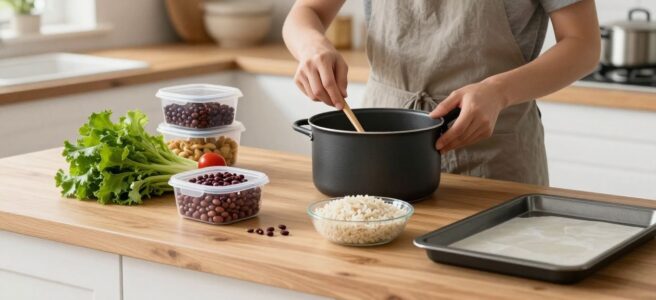
Efficiency comes from arranging tasks, not from rushing around the kitchen with a wooden spoon in one hand and regret in the other. A batch session should have a beginning, a middle, and a stopping point. The cook can prepare ingredients while the oven heats, use waiting time for washing up, and keep a clear surface for packing portions.
The aim is to reduce repeated effort across the week. One chopping session, one tray of vegetables, or one pot of grains can support several meals. Good organisation makes the food cheaper, but it also makes the kitchen feel less like a small, noisy workplace.
Prep ingredients before turning on the stove
The cook can read every recipe first, then gather ingredients, wash produce, and set out the required equipment. Chopping similar vegetables together saves time, while measuring spices before cooking prevents a frantic search through the pantry. This is especially helpful when several dishes share onions, garlic, carrots, or herbs.
A cleared bench also makes mistakes easier to spot. Ingredients can be grouped by recipe in bowls or trays, and cooking order can be written in a few words. Once the stove is on, the session becomes a sequence of known tasks rather than a scavenger hunt.
Use one-pot, sheet-pan, and slow-cooker methods
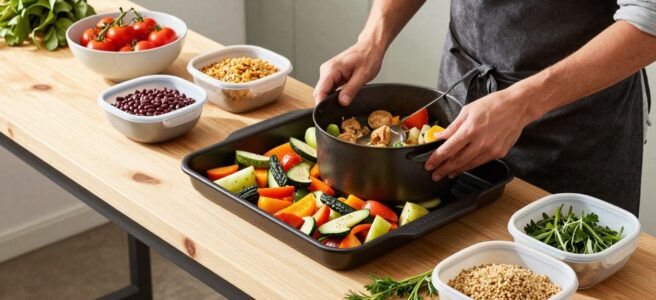
Methods that contain the mess can be valuable when several meals are being prepared. A one-pot dish reduces washing up, a sheet pan can roast vegetables and protein together, and a slow cooker can handle a long simmer while the cook prepares another component. The best method depends on the food, available equipment, and time.
These methods still need attention to texture and timing. Crowding a tray can steam rather than roast its contents, while delicate vegetables may not appreciate a long cook. A little planning keeps the convenience from producing a large, beige apology.
Cook components that can become several meals
Components offer more freedom than fully assembled meals. Cooked grains, roasted vegetables, beans, shredded meat, sauces, and boiled eggs can be combined in different ways over several days. They can also be seasoned at the finishing stage, which helps one base ingredient suit more than one meal.
The cook should avoid preparing every component so far in advance that it loses its best texture. Keep crisp toppings, fresh herbs, and dressings separate where practical. A meal assembled just before eating often feels fresher than one that has spent the week sealed in a container contemplating its fate.
Schedule dishes around cooking time and cleanup
Long-cooking dishes can begin first, followed by tasks that use the same equipment or workspace. While a pot simmers, the cook can portion grains, chop salad ingredients, or wash utensils that will not be needed again. A written order reduces idle time and stops the final hour becoming an avoidable pile-up.
Cleanup deserves a place in the schedule rather than being treated as a surprise ending. Washing one bowl while another dish cooks is less demanding than confronting every pan at once. The finished session should leave food ready to eat and the kitchen recognisably still a kitchen.
Stretch inexpensive ingredients without making meals boring
Low-cost food does not need to taste like a punishment for having a budget. Beans, lentils, grains, eggs, vegetables, and modest portions of meat can become satisfying meals when texture and seasoning are considered. The cook is not trying to disguise inexpensive ingredients; the aim is to give them enough variety to remain welcome.
Flavour is built in layers. Browning, aromatics, spices, sauces, pickles, and fresh toppings can change the character of a familiar base. A sensible batch-cooking plan therefore saves a little attention for finishing, not just filling containers.
Turn beans, lentils, and grains into satisfying mains
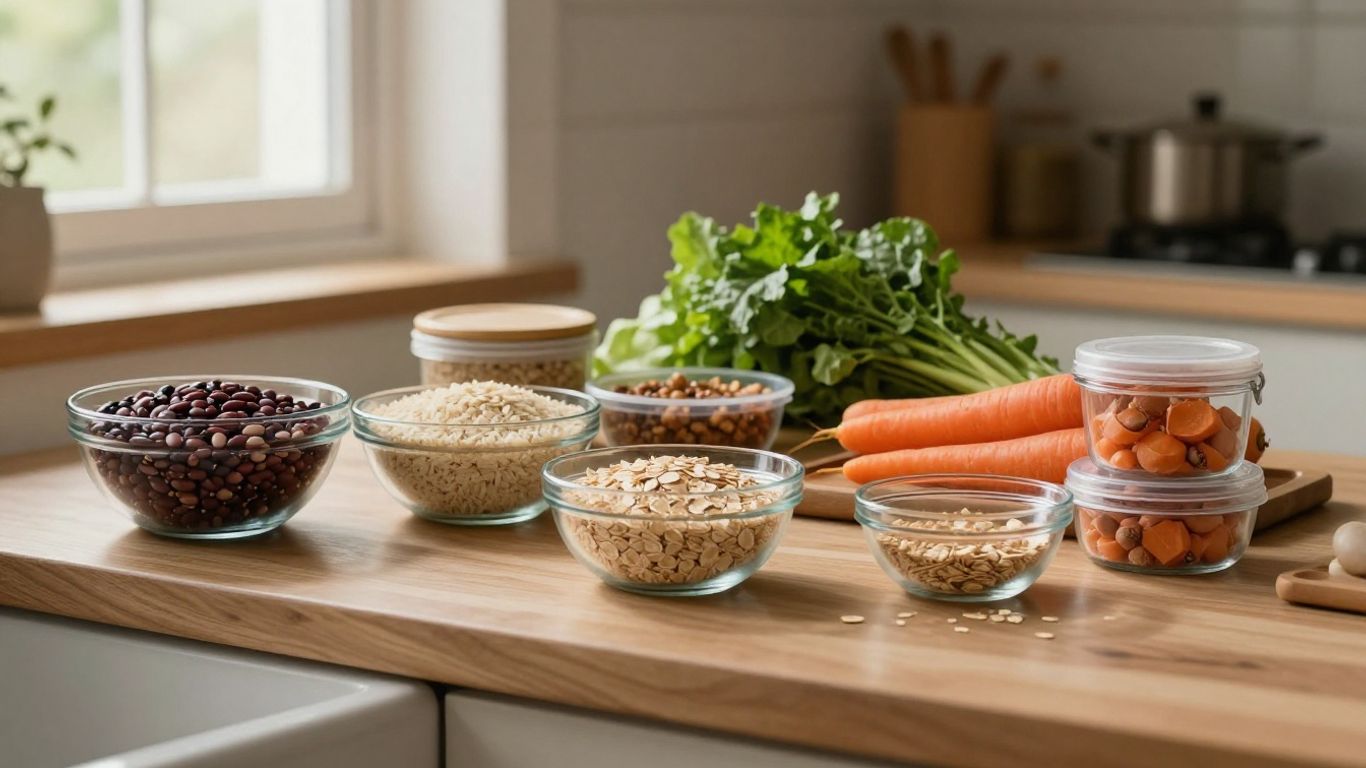
Beans and lentils bring body to soups, stews, patties, curries, and salads, while grains provide a useful foundation for bowls and stuffed vegetables. Combining them with roasted or sautéed produce adds contrast and makes the meal feel complete. The cook can vary the seasoning so the same pantry staples do not appear in identical disguises.
Texture matters as much as flavour. Some legumes can remain whole, some can be mashed, and some can be blended into a sauce. Toasted seeds, crisp breadcrumbs, herbs, or a spoonful of yoghurt can add interest without requiring an expensive main ingredient.
Use affordable proteins in smart portions
Eggs, tinned fish, beans, lentils, tofu, and less fashionable cuts of meat can all contribute protein to a batch menu. The most suitable choice depends on taste, storage, cooking time, and what the household already buys. A smaller portion paired with grains and vegetables may feel more satisfying than a large serving standing alone.
Protein can also be spread across several meals instead of assigned to one grand centrepiece. Shredded chicken, cooked eggs, or seasoned tofu can appear in wraps, salads, rice bowls, and soups. This makes one purchase work harder while keeping the menu from becoming a parade of identical plates.
Add flavor with sauces, spices, and aromatics
Onion, garlic, ginger, citrus, vinegar, chilli, herbs, and spices can shift a meal in a new direction. A tomato sauce may become smoky, herby, or warmly spiced depending on its finishing ingredients. The cook should taste as the dish develops rather than relying on a large quantity of one seasoning to do all the work.
Small finishing portions can be prepared separately and added just before eating. A lemony dressing, yoghurt sauce, salsa, or spiced oil can revive a plain grain bowl without requiring a second full recipe. This is a practical place to use pantry odds and ends before they quietly pass their best.
Make vegetables work across several recipes
Vegetables can be roasted, grated, steamed, blended, or folded through a dish, giving the same purchase several textures. Carrots might join a soup, a roast tray, and a slaw; cabbage can appear in stir-fries, salads, and wraps. The cook should choose a mix of sturdy vegetables and quick-cooking ones so everything does not become soft at the same speed.
Vegetable stems, leaves, and trimmings may also have a role when they are clean and suitable for the recipe. They can enrich stock, fill fritters, or join a sauce. Using more of each ingredient is economical, provided the result is genuinely enjoyable rather than merely technically edible.
Store and freeze meals safely
Storage is part of cooking, not an administrative task performed after the good work is over. Food should be divided into portions that will be eaten within a sensible time, cooled and handled according to ordinary food-safety guidance, and kept in suitable containers. When uncertain, the cook should follow local food-safety advice rather than guessing.
Freezing can protect a batch from becoming repetitive, but it is not a magic cupboard. Some meals need a little planning before freezing, particularly if they contain delicate vegetables, creamy sauces, or crisp toppings. Clear portions and dates make the freezer useful instead of mysterious.
Choose containers that protect portions and freshness
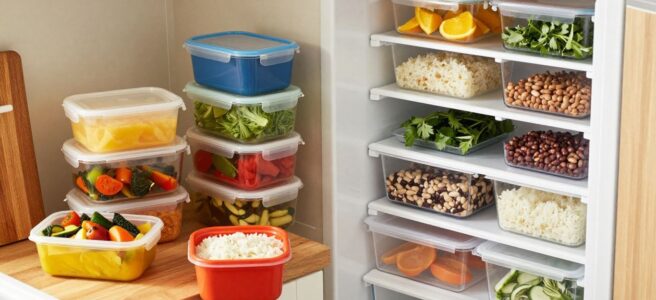
Containers should suit the food, the portion size, and the available storage space. Leak-resistant boxes help with soups and sauces, while shallow containers can cool and reheat portions more evenly when appropriate. Reusable containers are economical over time, provided their lids still fit and their corners have not begun telling stories.
The cook should leave suitable space when freezing foods that expand and avoid packing hot food into a crowded refrigerator. Keeping similar portions together makes later selection easier. A container that can move from storage to reheating, where suitable, also reduces washing up.
Label meals with dates and reheating instructions
A label can include the meal name, date prepared, portion size, and a simple note such as “add fresh herbs” or “reheat gently”. This prevents the freezer lottery in which every box looks like a beige surprise. Older portions can then be used first, while newer meals remain safely identified.
Labels are especially helpful when several sauces or components look alike. The cook can note whether an item is frozen, refrigerated, or intended to be combined with another container. A few readable words save far more time than opening every box for a forensic inspection.
Know which foods freeze well and which become sad
Soups, stews, cooked beans, many sauces, casseroles, and some grains generally suit freezing when packed and reheated appropriately. Crisp salads, raw watery vegetables, and some creamy mixtures may lose their original texture. The question is not whether a food can technically be frozen, but whether it will still be pleasant to eat.
Delicate toppings can be stored separately and added after reheating. Pasta may be better frozen with extra sauce, while roasted vegetables can be kept for the refrigerator if texture is a priority. A small test portion is a sensible way to learn what works in a particular household.
Thaw and reheat without drying everything out
A portion can be thawed in the refrigerator when time allows, or reheated using a suitable method for the food and container. The cook should stir sauces, add a little liquid where appropriate, and heat evenly rather than scorching the edges while the centre remains cold. Instructions should follow the food-safety guidance applicable to the household.
Reheating only the amount needed protects both texture and future portions. Some foods improve with a gentle reheat, while others need a fresh garnish or a splash of stock to restore their character. The goal is not to make a reheated meal pretend it was cooked seconds ago; it is to make it properly enjoyable.
Make your batch-cooking system cheaper over time
The first batch session is an experiment, even when the cook has followed a recipe carefully. Over time, the useful information comes from what was eaten, ignored, frozen, forgotten, or enthusiastically requested again. A system becomes cheaper when it learns from those details instead of repeating the same expensive mistakes with greater confidence.
The cook can review the plan briefly each week. Which ingredients ran out first? Which portions remained untouched? Which meals made busy evenings easier? These answers are more valuable than chasing a perfect menu that exists only on paper.
Track what you actually eat
A short record of meals eaten and leftovers remaining can reveal patterns that memory misses. Perhaps breakfasts disappear quickly but planned lunches do not, or perhaps a large dinner is consistently followed by a smaller appetite the next day. The record need not include calories, ratings, or elaborate commentary; a few honest notes are enough.
Those notes help the cook adjust quantities and choose recipes with a better chance of being used. A meal that looked economical but lingered for a week may deserve a smaller batch or a different seasoning. Practical evidence should outrank optimism.
Repurpose leftovers before buying more food
Before shopping, the cook can inspect cooked grains, vegetables, sauces, and proteins that remain. Leftover roast vegetables might fill a frittata, soup, wrap, or grain bowl, while a small amount of sauce can join beans or pasta. Repurposing works best when the next meal is decided before the leftovers become an archaeological layer.
The new dish should feel intentional rather than like a punishment for poor planning. A different texture, fresh garnish, or contrasting sauce can make the same components appealing again. This is where a little creativity saves both money and refrigerator space.
Adjust portions to reduce waste
Portion sizes should reflect how people actually eat, not how hungry they looked while writing the shopping list. If containers regularly return half full, the next batch can be smaller or packed in flexible portions. If food disappears before the planned meal, the cook can prepare one or two extra servings rather than doubling everything.
Smaller containers can be useful for lunches, snacks, and single servings, while larger ones suit family meals. Portioning also makes it easier to freeze only what will not be eaten soon. A modest adjustment repeated weekly can save more food than one dramatic pantry clear-out.
Refresh your menu with low-cost seasonal swaps
Seasonal produce can offer better value and better flavour, although local prices and availability will vary. The cook can swap one vegetable for another while keeping the same cooking method: pumpkin for sweet potato, cabbage for leafy greens, or apples for pears in a breakfast preparation. The rest of the menu need not be rebuilt from scratch.
A rotating list of familiar templates keeps planning simple. One week might centre on soups and grain bowls, another on tray bakes and wraps. Seasonal changes then provide interest without demanding a completely new collection of ingredients or a heroic Sunday afternoon.
Conclusion
Batch cooking on a budget works when the plan is modest enough to repeat, flexible enough to survive real life, and thoughtful enough to use what has already been bought. A clear spending limit, overlapping ingredients, efficient cooking, sensible storage, and regular review can turn a crowded kitchen session into dependable meals. The best system is not the one that produces the most food; it is the one that leaves the household fed, less wasteful, and reasonably pleased to see dinner arrive.