Start with a budget that fits real life
A useful meal plan starts with what a household can actually spend, not an imaginary week of perfectly coordinated dinners. Batch cooking on budget works best when the numbers leave room for ordinary life: a change of plans, a missing ingredient, or a night when nobody wants the meal that was carefully assigned to Tuesday. A simple spending limit gives the cooking session a sensible boundary.
Set a weekly food spend before choosing recipes
Before recipes enter the picture, a household can set aside a realistic amount for groceries and decide whether that covers every meal or only planned lunches and dinners. Looking at recent receipts can help establish a starting point without turning the exercise into a forensic investigation of every snack. The useful figure is one that can be followed, not one that looks impressive on paper.
Once the limit is clear, recipes can be chosen to fit it rather than the other way around. That small change makes it easier to compare a few practical meal options and avoid building a plan around ingredients that consume the whole budget.
Check your pantry and freezer for forgotten bargains
A quick inventory often reveals the most affordable ingredients already in the kitchen. Dry beans, rice, tins, frozen vegetables, and odds and ends tucked behind the ice tray can all become part of the week’s plan. The pantry may not look glamorous, but it has occasionally been quietly paying rent.
A short list of what is on hand helps prevent duplicate purchases and suggests which meals are worth planning around. It also makes the next shop more focused: buy what completes a meal, rather than what merely looks useful beneath bright supermarket lighting.
Leave room for price changes and unexpected meals
Prices and plans can shift between the moment a menu is written and the moment someone reaches the checkout. A modest buffer helps absorb a substitute ingredient or a last-minute meal without requiring a complete rewrite. It is also worth leaving one meal flexible, especially in a household where schedules are prone to improvisation.
That flexibility is not a failure of planning. It is what keeps a budget from becoming brittle, and it gives the week a little breathing room when leftovers or a changed appetite alter the original plan.
Plan meals around affordable ingredients
An affordable plan does not need a different recipe for every day. It can start with a few dependable ingredients and let them shape several meals, with enough variation that the same pot does not appear to be following everyone around the house. Staples provide a steady foundation, while fresh choices and seasonings bring the week to life.
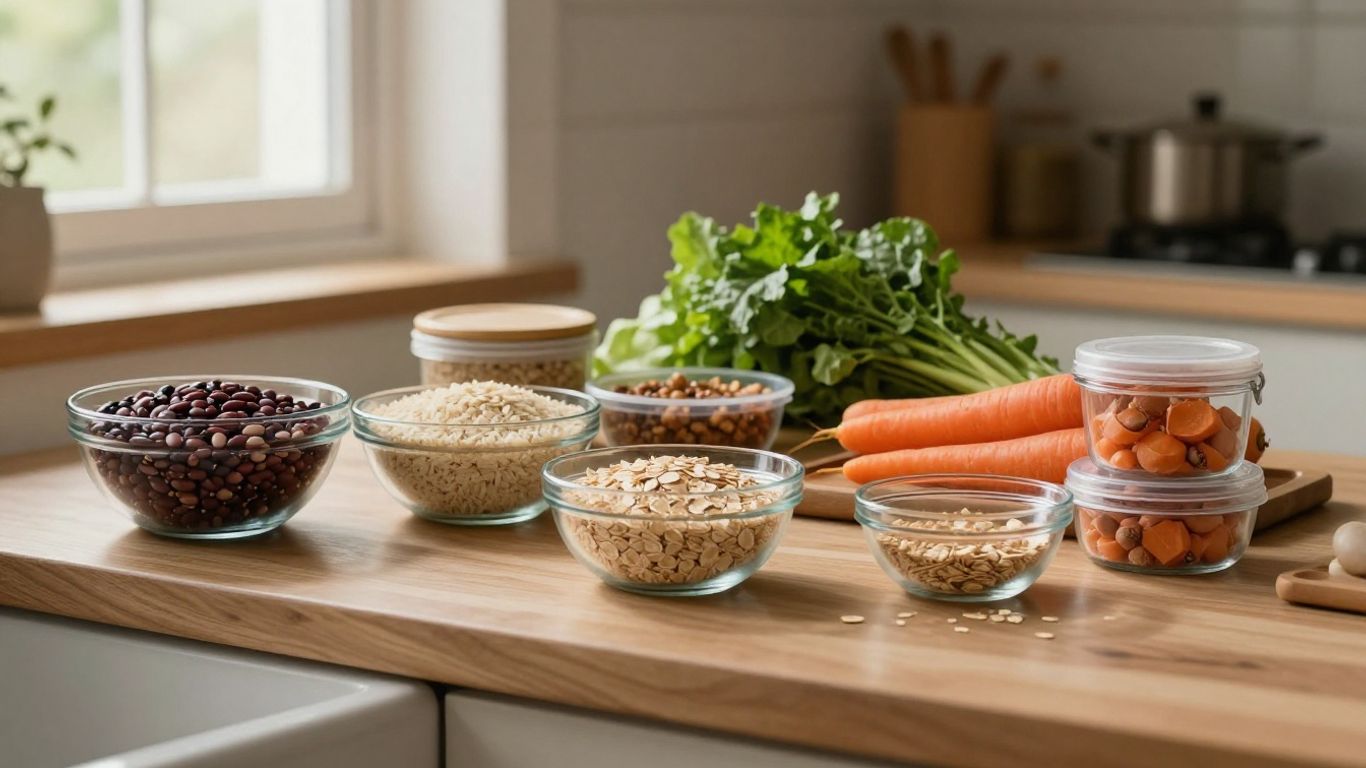
Build recipes around low-cost staples like beans, rice, and oats
Beans, rice, and oats are useful starting points because they can be incorporated into a range of meals and stored for later use. A pot of beans might become a filling bowl one day and a filling for wraps the next; rice can sit beside a saucy dish or form the base of a simple lunch. Oats can take care of breakfast without demanding an elaborate morning routine.
The point is not to eat the same bowl repeatedly, but to make a modest ingredient budget stretch across different meals. Pairing a staple with vegetables, a sauce, or a small amount of another ingredient gives it a different role without requiring an entirely new shopping basket.
Choose ingredients that can pull double duty
Ingredients with more than one use simplify both the shopping list and the cooking session. A bag of carrots can go into a roast tray, a soup, or a lunchbox; greens can be added to a quick pan meal or folded into a grain bowl. A versatile ingredient is especially helpful when the household is planning for meals rather than following recipes as if they were building instructions.
It helps to choose ingredients that suit the household’s actual habits. If a vegetable is often left behind, buying a smaller amount or choosing a frozen option may be more practical than assigning it a heroic role in every meal.
Mix familiar favorites with flexible meals
A weekly plan feels easier to follow when it includes at least a few meals everyone already enjoys. Those familiar dishes can anchor more flexible options, such as a soup, grain bowl, or frittata that can absorb whatever ingredients remain. There is comfort in knowing dinner is coming, even if it is not arriving with a dramatic reveal.
A flexible meal also gives ingredients a second chance before they are forgotten in the refrigerator. Keeping the format familiar while changing the vegetables, beans, or toppings helps create variety without needing a new recipe for every night.
Shop strategically without falling for “deals”
A low shelf price does not automatically make an item good value if it is too large, hard to use, or destined to be discarded. A thoughtful shop starts with the meals already planned and checks whether each purchase has a clear purpose. That approach leaves less room for attractive extras to quietly become next week’s mystery ingredients.
Compare unit prices, not just shelf prices
When package sizes differ, comparing the cost per standard unit can make the better-value option easier to spot. The shelf price still matters to the amount spent today, but the unit price helps show what the household is paying for a comparable quantity. This is particularly useful for pantry items bought in more than one size.
A larger package only saves money when it will be used. If it requires buying another ingredient or sits untouched for months, the smaller option may be the more practical purchase, even if its unit price is higher.
Decide when frozen, canned, or fresh produce makes sense
Each form of produce can suit a different meal and schedule. Fresh vegetables work well when they are likely to be used soon; frozen options can be convenient for recipes that need only a portion; canned produce can be handy for soups, sauces, and quick lunches. None needs to be treated as the default for every situation.
The plan should account for preparation time, storage space, and how quickly the household tends to use an ingredient. Choosing the form that fits the meal can reduce waste and keep shopping simple, rather than making freshness into a test nobody asked to sit.
Make a shopping list that keeps impulse buys in check
A list tied to the menu keeps the shop connected to the meals the household intends to cook. It can also make it easier to notice when a recipe calls for an ingredient that is already in the pantry. A compact list might group purchases by purpose:
- Staples needed for planned breakfasts and lunches
- Produce selected for more than one meal
- Ingredients that complete specific recipes
- Optional extras only if the budget allows
That last category gives room for a useful extra without letting it quietly take over the trolley. If an unplanned item goes in, another planned purchase may need a second look before the shop is finished.
Cook efficiently with one prep session
A single cooking session can make the rest of the week easier, provided it is planned around the kitchen that actually exists. The aim is not to occupy every burner and appliance at once, but to make a few things in a sensible order. A calmer session usually beats an ambitious one that ends with three timers ringing and a spoon missing.
Sequence tasks to make the most of oven and stovetop time
Tasks can be arranged so that longer cooking happens first and shorter jobs fit around it. While a pot simmers, vegetables can be chopped or a tray can roast; near the end, quick sauces or toppings can be assembled. This reduces idle waiting without asking the cook to manage every pan in the kitchen at the same moment.
A brief written sequence is often enough to keep the session moving. It also helps reveal when a recipe is competing for the same oven or stovetop space as another, before the ingredients are already prepared.
Use a few base ingredients in meals that taste different
A cooked grain, a tray of vegetables, and a pot of beans can serve as starting points for meals with different flavours. One combination might take a bright dressing, while another gets a warm spice blend or a spoonful of sauce. The ingredients stay familiar, but the final plate does not have to feel like a reheated copy.
It is often easier to prepare the shared components first and finish each meal differently later. That keeps the cooking session manageable and leaves room to adjust a serving to suit whoever is eating it.
Scale recipes to match your cookware and available time
Recipe quantities should fit the containers, pots, and trays available at home. Doubling a recipe can be efficient, but an overcrowded pan may cook unevenly and a full refrigerator may leave no space for the finished food. A household can choose a smaller batch if that better suits its kitchen and schedule.
The same principle applies to time. A plan with fewer components is still a successful prep session if it creates useful meals and does not turn the whole afternoon into kitchen duty.
Store and portion food to avoid waste
Good storage is part of the cooking plan, not a tidy-up detail for later. Food is more likely to be eaten when it is easy to find, portion, and reheat. A little thought at the end of the session can save the household from discovering a forgotten container after its contents have become unrecognisable.
Match containers and portions to how you’ll reheat meals
Containers work best when their size suits the way a meal will be used. Individual portions can make weekday lunches easier to grab, while a larger container may suit a dish intended for a shared dinner. Shallow, practical containers can also make it easier to cool and reheat food evenly, depending on the meal and the household’s routine.
Portions need not be identical. A household can separate food according to who will eat it and whether it is intended for lunch, dinner, or a quick addition to another meal. That small distinction can make leftovers feel useful instead of compulsory.
Freeze extras before they become science projects
If a batch is larger than the household expects to eat soon, freezing some portions early can preserve their usefulness. It is easier to freeze food while it still looks appealing than to negotiate with a container that has spent too long at the back of the fridge. Meals should be cooled and stored in a way that follows safe food-handling guidance.
Freezer space is not limitless, so it helps to choose extras that are likely to be used and to leave room for them. Freezing everything is not a plan if nobody can later identify what is in the container or where it fits into a meal.
Label meals so mystery leftovers stay mysterious for less time
A clear label can include the meal name and the date it was stored. That simple note helps household members choose what to use first and avoids the familiar freezer puzzle of guessing whether a container holds soup or something more ambitious. Labels need not be elaborate; legibility is the main event.
Keeping older meals toward the front and grouping similar items together makes the freezer easier to use. When storage is visible, a planned meal is more likely to become dinner rather than an archaeological discovery.
Keep batch cooking enjoyable and sustainable
A cooking routine lasts longer when it works with the household’s tastes and energy, rather than demanding a perfect day every week. The most useful system is one that can be repeated, adjusted, and occasionally made smaller. A little variety helps, too; even dependable leftovers appreciate a change of scenery.
Add sauces, spices, and toppings for easy variety
Sauces, spices, herbs, and crunchy toppings can change the feel of a meal without requiring another full cooking project. A shared base might pair with a tangy dressing one day and a warmer seasoning the next. Keeping some flavouring separate until serving can also help a batch suit different preferences.
A small selection is usually enough to create options. The aim is not to collect every condiment in the cupboard, but to use a few that fit the meals already planned.
Adapt the plan when schedules or appetites change
A menu is a guide rather than a binding contract. If a household’s plans change, a prepared component can be moved to another day or used in a different meal. If appetite is lower than expected, smaller portions or a pause in cooking may make more sense than producing extra food simply because it was on the schedule.
A flexible plan makes batch cooking easier to sustain because it allows real life to interrupt without ruining the week. The ingredients can remain useful even when the original meal order changes.
Review what worked before planning the next round
After the week, a quick review can show which meals were genuinely useful and which ingredients were harder to use than expected. A household might keep the recipes that disappeared happily, adjust the portion sizes, or choose a different vegetable next time. No elaborate record is needed; a short note can be enough to improve the next round.
That small check turns each cooking session into a more tailored routine. Over time, the plan can become simpler because it reflects what the household actually eats, rather than what sounded appealing during an optimistic moment at the kitchen table.
Conclusion
Batch cooking on a budget is less about producing a perfect week than making a few sensible choices that reduce waste and ease the next meal. A realistic spending limit, flexible ingredients, a measured prep session, and clear storage can create a routine that fits an ordinary household. When the plan leaves room for changing appetites and schedules, it is far more likely to be used—and repeated.